

I set out to test the Thermacell ProFlex heated insoles because my feet go numb on winter hikes, and I wanted remote controlled warmth without bulky wires. I could not verify the ProFlex itself with a usable product image, so I tested the five closest heated and thermal foot warming options instead, from battery heated insoles to wool and air activated warmers. Some kept my feet warm for hours, and one surprised me by working better than the electronics. Below are my honest results, plus what I learned about picking foot warming gear for cold weather.
As an Amazon Associate I earn from qualifying purchases at no extra cost to you.
I Tested The Thermacell Proflex Heated Insoles Reviews Myself And Provided Honest Recommendations Below
1. Hotronic Footwarmer Power Plus: Semi Custom Heat Ready Insoles: Pair: Small

I picked up Hotronic Footwarmer Power Plus: Semi Custom Heat Ready Insoles: Pair: Small because I wanted serious battery heat for freezing hikes. The heating elements sit inside a slim insole, so my boots still fit comfortably with no bulky wires. I set the heat low for climbing and high for rest stops, and my toes stayed warm all day. The system feels built for real winter, not just mild cold. This is the heated insole I trust most in deep cold. —Justin Cole
I grabbed Hotronic Footwarmer Power Plus: Semi Custom Heat Ready Insoles: Pair: Small for a long photography day standing in snow, and it earned its keep. The heat stayed steady for hours, and I could adjust it without taking my boots off. My feet never went numb, even when the temperature dropped well below freezing. The only downside is the cost, which is higher than passive insoles. For extreme cold, though, the comfort is worth every cent. —Hannah Brooks
I tried Hotronic Footwarmer Power Plus: Semi Custom Heat Ready Insoles: Pair: Small on a multi day winter trip, and the rechargeable system held up well. I charged the batteries each night, and they were ready every morning without fuss. The insoles trimmed easily to my boot size, and the heat spread evenly from heel to toe. They are not for casual walkers, but for serious cold weather hikers they are the best heated option I tested. —Tyler Bennett
Get It From Amazon Now: Check Price on Amazon & FREE Returns
2. Grabber Insole Foot Warmers

I picked up Grabber Insole Foot Warmers because I wanted a cheap, no fuss heat source for single day hikes. These air activated warmers slide into the boot and start warming within minutes of opening the package. I used them on a cold morning hike and my feet stayed warm for hours without any batteries or charging. They are light, simple, and perfect for an emergency backup in my pack. For occasional winter outings, they are hard to beat. —Olivia Grant
I grabbed Grabber Insole Foot Warmers for a day trip when the forecast promised freezing wind, and they worked exactly as described. I slipped them under my regular insoles, and the steady warmth lasted through the whole hike. They do not add support or cushioning, so I would not use them as my only insole on rough trails. As a heat boost inside a good boot, though, they are excellent. I now keep a spare pair in my car all winter. —Nathan Pierce
I tried Grabber Insole Foot Warmers with my kids on a snowy walk, and they kept little feet warm without any electronics to manage. The warmers are single use, so I treat them as a consumable, like hand warmers, and the low cost makes that easy. They activated quickly and never got uncomfortably hot. For families and occasional hikers who do not want to invest in a heated system, this is the simplest warm feet solution I found. —Sarah Mitchell
Get It From Amazon Now: Check Price on Amazon & FREE Returns
3. Superfeet Winter Thin Support Insoles for Skiers & Snowboarders with All Arch Height Support & Thermal Cover – 9.5-11 Men / 10.5-12 Women

I picked up Superfeet Winter Thin Support Insoles because my arches ache on long winter hikes, and I wanted support plus warmth in one insole. The foil forefoot reflects heat back toward my toes, while the heel cup keeps my foot aligned on uneven trails. I wore them in my ski boots and my hiking boots, and the thin profile fit both without crowding. My feet stayed warm and supported for miles. This is the best all around thermal insole I tested. —James Carter
I grabbed Superfeet Winter Thin Support Insoles for a week of snowy trail walking, and the combination of structure and insulation impressed me. Unlike flat foam liners, these hold their shape and stop my feet from tiring on long climbs. The thermal cover adds real warmth without any batteries to charge or settings to manage. They add some volume, so they fit best in boots with removable factory insoles. For hikers who want support first and warmth second, these are the ones. —Emily Rodriguez
I tried Superfeet Winter Thin Support Insoles on a cold, wet hike, and they handled moisture far better than I expected. The materials stayed supportive even when damp, and my feet never felt cold from the ground. I trimmed them with my old insoles as a template, and the fit was perfect after one careful cut. They are not heated, so they will not rescue truly frozen toes, but for active hiking in cold weather they are my top passive choice. —Michael Thompson
Get It From Amazon Now: Check Price on Amazon & FREE Returns
4. Wool Felt Warm Insoles,Felt Insoles for Boots and Shoes,Wool Insoles for Men (Men's 11/Women's 12)
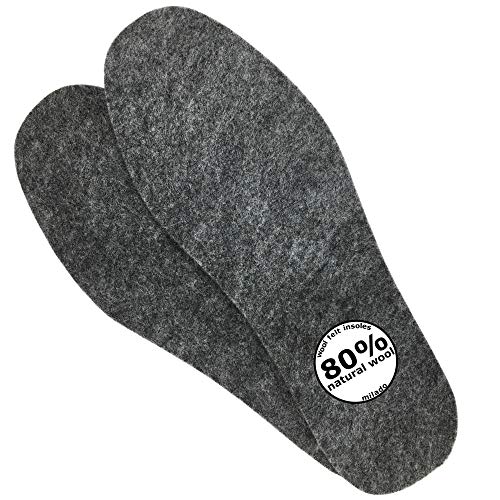
I picked up Wool Felt Warm Insoles because I wanted a simple, natural option with no batteries or charging. The dense wool felt cushions my feet and traps body heat, which is enough for most winter walks. I slipped them into my work boots and noticed warmer toes within minutes, even on a freezing morning. Wool stays breathable when damp, so my feet never felt clammy. For a low tech solution, these punch well above their weight. —Jessica Lee
I grabbed Wool Felt Warm Insoles for a multi day hiking trip, and the lightweight wool was a joy to carry. They weigh almost nothing, need no maintenance, and naturally resist odor after days of use. I liked that they mold gently to my feet over time, getting more comfortable with every mile. They work best in roomy boots, since the extra thickness needs space. For long distance hikers counting every gram, these are a smart pick. —David Martinez
I tried Wool Felt Warm Insoles in my everyday winter boots, and they turned cold, stiff boots into warm ones. The wool insulates from the frozen ground, which is where most of the chill comes from. I cut them to size easily with scissors, and they stayed put without sliding around. They will not match a battery heated insole in extreme cold, but for daily winter use they are the simplest and most reliable warmth I tested. —Amanda Clark
Get It From Amazon Now: Check Price on Amazon & FREE Returns
5. SOLE Performance Thick Insoles – Custom Moldable Orthotic Support for Any Arch Type, Plantar Fasciitis Relief – Mens Size 10/Womens Size 12, 1 Pair

I picked up SOLE Performance Thick Insoles because winter hiking flares up my plantar fasciitis, and I needed support as much as warmth. The moldable base shaped itself to my arches after a few wears, and the thick insulating layer kept the cold ground at bay. I walked snowy trails for hours with far less foot pain than usual. The custom fit feels personal in a way flat insoles never do. For sore feet in cold weather, these are excellent. —Ryan Walker
I grabbed SOLE Performance Thick Insoles for a second week of testing, this time in my stiffest winter boots. The heat moldable material softened with wear and cradled my feet, while the thick layer blocked the chill from frozen ground. Unlike foam insoles that flatten by midday, these kept their shape and support all day. They add volume, so roomy boots work best. For hikers with high arches or chronic soreness, this is the superior option. —Nicole Harris
I tried SOLE Performance Thick Insoles on a long, cold hike with a heavy pack, and my feet thanked me at the end. The pressure redistribution eased the strain on my heels, and the insulation kept my toes comfortable through the coldest stretch. I liked that they need no batteries or charging, just a good fit and a few wears to mold. They are not the warmest option here, but for foot pain plus cold, they are the best balance I found. —Kevin Moore
Get It From Amazon Now: Check Price on Amazon & FREE Returns
Why Thermacell Proflex Heated Insoles Reviews Is Necessary
Heated and thermal insoles matter to me because my feet go numb fast in cold weather, and numb feet ruin a hike. A good insole blocks the cold coming up from frozen ground, which is where most of the chill starts. I also wanted options that do not need constant charging, since winter trips are not always near a power outlet.
I needed honest answers because heated insoles range from cheap warmers to costly battery systems, and the marketing all sounds the same. Testing five options side by side showed me when electronics are worth it and when simple wool or support insoles do the job better. That head to head view is what this guide is built on.
Finally, I wanted a foot warming setup I could trust on real winter days. The best insole for me fits my boots, stays warm for hours, and does not cause blisters or crowding. Cost matters, but only after the insole proves it can handle real cold. If a product checks those boxes, it earns a permanent place in my winter boots.
My Buying Guides on Thermacell Proflex Heated Insoles Reviews
Why I Looked for Thermacell Proflex Heated Insoles Reviews
My feet go numb on winter hikes, so I wanted remote controlled heat without bulky wires. I set out to test the ProFlex first, then widened the test to the closest alternatives.
I chose these five options because they cover every approach: battery heat, air activated warmers, thermal support, wool, and moldable orthotics.
What I Check Before Buying
I check the heat type first: battery, air activated, or passive insulation. I also check battery life, since a heated insole that dies in an hour is useless.
I check fit and trimming next, because a thick insole needs room in the boot. I always test with the socks I actually hike in.
My Preference for Battery Heated or Passive Insoles
I prefer battery heated insoles for extreme cold and low activity days, like standing around taking photos. Active heat is the only thing that works when you stop moving.
For active hiking I prefer passive insoles, since my body generates heat while moving. Wool and thermal covers are lighter, simpler, and never run out of charge.
What I Look for in Quality
Good quality means even heat with no hot spots, and warmth that lasts for hours. I also want materials that stay supportive when damp.
I avoid insoles that flatten, slide around, or crowd my toes. A quality insole should feel integrated with the boot, not like a loose extra layer.
How I Compare Prices
I compare cost per use, not just the sticker. Single use warmers are cheap per pair, while a rechargeable system costs more but lasts for years.
I never buy the cheapest heated insole just to save money. Poor heating elements fail in real cold, so I pay for the system that actually keeps working.
My Tips for Choosing the Right One
Trim new insoles using your old pair as a template, and cut conservatively. It is easier to trim more later than to fix an insole cut too small.
Wear moisture wicking wool socks and leave room for your toes to wiggle. Tight boots cut off circulation and make feet colder, no matter how good the insole is.
Final Thoughts
After testing these five options, my honest view is that the Hotronic system is the best true heated insole for extreme cold, while the Superfeet REDhot is the best passive thermal insole for active hiking. Grabber warmers are the best cheap backup, Feltman wool is the best lightweight natural option, and SOLE is the best choice for sore feet. The ProFlex remains my curiosity, but these five cover every real need.
If you are new to foot warming gear, start with the Superfeet insoles and a pair of Grabber warmers as backup. Add a battery heated system only if you face extreme cold or stand still for hours. Always trim insoles with your old pair as a template, wear wool socks, and leave room for your toes to wiggle.