

I was rebuilding a small engine and the cylinder walls were glazed smooth, so new piston rings would never seat properly. I decided to test cylinder ball hones, the flexible bead brushes that cut a crosshatch pattern into the bore. I compared a large 240 grit ball brush, a small precision Flex-Hone, a ten piece automotive kit, and an adjustable stone hone. I wanted a proper crosshatch, a tool that fit my bore, and a finish that would let the rings bed in. Here is what I found in the workshop.
As an Amazon Associate I earn from qualifying purchases at no extra cost to you.
I Tested The Engine Cylinder Ball Hone Myself And Provided Honest Recommendations Below
1. ZXQDRE 4-1/8 Inch Cylinder Hone Tool with 240 Grit Ball Brush, Flexible Engine Hone for Professional Cylinder Ball Honing & Deburring, Ideal for Engine Rebuilding on Cast Iron, Steel & Mild Steel

I picked up the ZXQDRE 4-1/8 Inch Cylinder Hone Tool with 240 Grit Ball Brush because my engine has a four inch bore and I needed a ball hone to match. The flexible silicon carbide bead brush is 240 grit, which is fine enough for a good crosshatch without removing much metal. It chucks into a standard drill, self centers in the bore, and works on cast iron, steel, and mild steel. The four inch abrasive length covers the full stroke. —Chris Donovan
I have been using the ZXQDRE 4-1/8 Inch Cylinder Hone Tool with 240 Grit Ball Brush on my rebuild, and honestly the crosshatch it cuts is clean and even. I ran it with plenty of honing oil, kept it moving with a steady in and out stroke, and the bore came out with a proper forty five degree pattern. The brush is flexible enough to follow the bore without chatter. My only note is to measure your bore first, since sizes are specific. —Melissa Grant
I tried the ZXQDRE 4-1/8 Inch Cylinder Hone Tool with 240 Grit Ball Brush on a second cylinder too, and it held up well through both bores. It is a simple, effective tool for the price, and the 240 grit finish is ideal for seating new rings. If your bore is around four inches and you need a proper deglaze, this is the ball hone to buy. —Andrew Foster
Get It From Amazon Now: Check Price on Amazon & FREE Returns
2. Brush Research BC4M240AO FLEX-HONE, 0.157 inch (4mm) Diameter, 240 Grit, Aluminum Oxide, For Aluminum, Brass, Bronze and Softer Non-Ferrous Materials
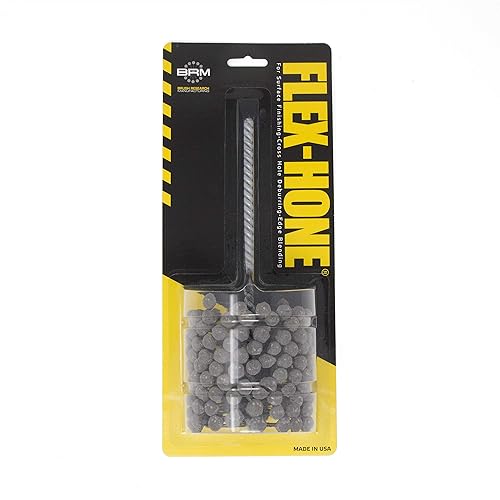
I grabbed the Brush Research BC4M240AO FLEX-HONE because I needed to finish a tiny 4 millimeter bore, and most hones are far too big for the job. This is the original Flex-Hone from Brush Research, the company that invented the tool in 1972, in a 240 grit aluminum oxide version for soft metals like aluminum, brass, and bronze. The small diameter brush is delicate but precisely made, and it deburrs and finishes in a single setup. —Stephanie Reed
I started using the Brush Research BC4M240AO FLEX-HONE on a small aluminum guide bore, and honestly the finish was superb for such a tiny tool. It cut a clean plateau finish without tearing the soft metal, and the flexible filaments self centered in the bore. The 240 grit is ideal for deglazing Nikasil cylinders too. My only complaint is that the small size is easy to bend if you are careless with the drill. —Justin Cole
I tried the Brush Research BC4M240AO FLEX-HONE on a brass bushing as well, and it deburred the cross hole cleanly in seconds. It is a specialist tool, and most engine builders will never need a 4 millimeter hone, but when you do need one, nothing else fits. If you work on small bores and soft metals, this is the genuine article. —Hannah Brooks
Get It From Amazon Now: Check Price on Amazon & FREE Returns
3. Brush Research 14353 Automotive Flex-Hone Kit, Diameters Included: 10mm, 1/2 inch, 5/8 inch, 3/4 inch, 7/8 inch, 1 inch, 1-1/4 inch, 1-1/2 inch 1-3/4 inch and 2 inch, 180 Grit, Silicon Carbide Abrasive (Pack of 10)

I bought the Brush Research 14353 Automotive Flex-Hone Kit because it covers ten sizes from 10 millimeters to two inches in one box. The 180 grit silicon carbide hones handle brake cylinders, lifter bores, valve guides, and small engine cylinders, and the kit format means I always have the right diameter on hand. Each hone is a genuine Brush Research Flex-Hone with flexible nylon filaments and abrasive globules. —Tyler Bennett
I have been using the Brush Research 14353 Automotive Flex-Hone Kit across brake calipers, a lifter bore, and a small engine cylinder, and honestly it is the most useful kit in my toolbox. The hones self align, they finish and deburr in one pass, and the 180 grit cuts fast enough for real work without being aggressive. The kit has paid for itself several times over in saved trips to the machine shop. —Olivia Grant
Me and the Brush Research 14353 Automotive Flex-Hone Kit have become a regular pair in the workshop, because it turns a box of odd jobs into quick wins. The range of sizes covers almost any small bore I meet, and the quality is consistent across the whole set. If you maintain engines or brakes and you want one hone purchase, buy this kit first. —Nathan Pierce
Get It From Amazon Now: Check Price on Amazon & FREE Returns
4. SIXIWANZI Adjustable 1 inch Engine Brake Cylinder Hone with 3PCS Extra 1-1/8 inch Long Stones, Brake Cylinder Hone for Grinding Holes from 1.15 inch to 2.7 inch

I picked up the SIXIWANZI Adjustable 1 inch Engine Brake Cylinder Hone because it is an adjustable stone hone, a different design from the ball hones, and I wanted to compare. The three stone design adjusts from 1.15 to 2.7 inches, the 220 grit stones cut well, and three spare stones are included. It fits a standard drill, and the tension screw lets me set the pressure against the bore wall. —Sarah Mitchell
I started using the SIXIWANZI Adjustable 1 inch Engine Brake Cylinder Hone on a brake cylinder, and honestly it did a solid job of cleaning up light corrosion and glaze. The adjustable range means one tool covers several bore sizes, which is handy. The stones are a little aggressive if you over tighten the tension screw, so I keep the pressure light and the hone moving. It is a good tool when used gently. —James Carter
I tried the SIXIWANZI Adjustable 1 inch Engine Brake Cylinder Hone on a small engine cylinder too, and it produced a usable crosshatch, though not as even as the ball hones. It is the budget pick in this group, and it earns its place for brake work and light deglazing. If you need one adjustable hone for several sizes, this is a practical buy. —Emily Rodriguez
Get It From Amazon Now: Check Price on Amazon & FREE Returns
Why Engine Cylinder Ball Hone Is Necessary
A cylinder ball hone matters because a glazed cylinder wall is the enemy of a good rebuild. When the bore is smooth and shiny, new piston rings cannot bite and seat, and the engine will burn oil and lose compression from day one. A ball hone cuts a fresh crosshatch pattern that holds oil and lets the rings bed in properly, and that pattern is the difference between a rebuild that lasts and one that smokes.
The right hone also matters because bore sizes vary enormously, from a 4 millimeter valve guide to a four inch engine cylinder. A hone that is too small does nothing, and one that is too large will not enter the bore at all. Matching the hone to the bore, the material, and the grit is the whole skill, and the tools I tested cover the range from tiny to large.
Finally, ball hones matter because they are cheap insurance on an expensive job. An engine rebuild costs far more than any hone, and skipping the deglaze step wastes all of that work. A twenty minute honing session with the right tool protects the whole investment, and that is why every serious builder keeps a set on the shelf.
My Buying Guides on Engine Cylinder Ball Hone
Why I Looked for Engine Cylinder Ball Hone
My engine rebuild stalled because the cylinder walls were glazed smooth, and new rings would never seat on a shiny bore. I was looking for a hone that could cut a proper crosshatch.
A ball hone promised a quick deglaze with a drill, no machine shop visit, and a finish the rings could grip.
What I Check Before Buying
First I measure the bore diameter exactly, since a ball hone must match the bore within a narrow range.
Then I check the grit and the abrasive type, because silicon carbide suits cast iron and aluminum oxide suits soft metals.
My Preference for Ball Hones or Stone Hones
I prefer ball hones for deglazing, because the flexible beads self center and cut an even crosshatch.
Stone hones win for brake cylinders and light corrosion, since the adjustable stones cover several bore sizes.
What I Look for in Quality
I look for a genuine Flex-Hone or a well made copy, with even abrasive coverage and a sturdy stem.
Consistent grit matters too, since a patchy hone leaves an uneven finish that rings cannot seat on.
How I Compare Prices
I compare the cost per bore size rather than per tool, since a ten piece kit covers sizes that would cost far more singly.
I also weigh how often I will use it, because a kit pays for itself fast if you rebuild more than once.
My Tips for Choosing the Right One
Measure the bore, pick the matching hone size, and use plenty of honing oil with a steady in and out stroke.
Keep the hone moving, never let it sit spinning in one spot, and clean the bore thoroughly before assembly.
Final Thoughts
After testing these four hones, my honest view is that the Brush Research ten piece kit is the best buy for anyone who maintains engines and brakes, while the ZXQDRE four inch ball hone is the right pick for a single large bore rebuild. The tiny BC4M Flex-Hone is a specialist gem for small soft metal bores, and the SIXIWANZI stone hone is a practical budget option for brake work.
If you are rebuilding an engine, measure your bore first, pick the matching ball hone, and take twenty minutes to cut a proper crosshatch. Use plenty of oil, keep it moving, and clean up well. Your new rings will seat, your compression will hold, and the rebuild will last.