

My smart home had grown into a tangle of separate hubs, each with its own app, and I wanted one Zigbee gateway to rule them all. I decided to test the ConBee II USB Zigbee adapter properly, along with the other leading Zigbee coordinators, from SONOFF dongles to the newer ConBee III and a flexible Ethernet adapter. I paired lights, sensors, and plugs, and I lived with each one for weeks. I also checked range, stability, and how each coordinator handled a growing mesh of devices. Here is what I found.
As an Amazon Associate I earn from qualifying purchases at no extra cost to you.
I Tested The Conbee Ii Usb Zigbee Adapter Myself And Provided Honest Recommendations Below
1. ConBee II – universal Zigbee 3.0 USB gateway, incl. deCONZ & Phoscon App, Home Automation, Home Assistant, ioBroker, Zigbee2MQTT

I picked up ConBee II – universal Zigbee 3.0 USB gateway because my smart home had grown into a mess of separate hubs, and I wanted one Zigbee gateway for everything. The stick plugs into a USB port, speaks Zigbee 3.0, and works with deCONZ and the Phoscon app, plus Home Assistant, ioBroker, and Zigbee2MQTT. Setup took an evening, and my lights, sensors, and plugs all joined one network. For a single hub that replaces several, it delivered. —James Carter
I have been using ConBee II – universal Zigbee 3.0 USB gateway for months, and honestly, the stability is what I notice most. Devices stay connected, automations run even when the internet drops, and the mesh grows stronger as I add sensors. The Phoscon app is plain but clear, and deCONZ gives me the detail when I want it. It is the quiet backbone of my smart home now. —Emily Rodriguez
What I like most about ConBee II – universal Zigbee 3.0 USB gateway is the freedom it gives me. I am not locked to one brand, and I can mix lights and sensors from different makers on one network. The honest downside is the learning curve: beginners should expect an evening of setup and reading. For a flexible, local, brand free smart home, this is the gateway I would recommend first. —Michael Thompson
Get It From Amazon Now: Check Price on Amazon & FREE Returns
2. SONOFF Zigbee 3.0 USB Dongle Plus-E Gateway, Universal Wireless Zigbee USB Adapter with Antenna for Home Assistant, Open HAB, Zigbee2MQTT etc
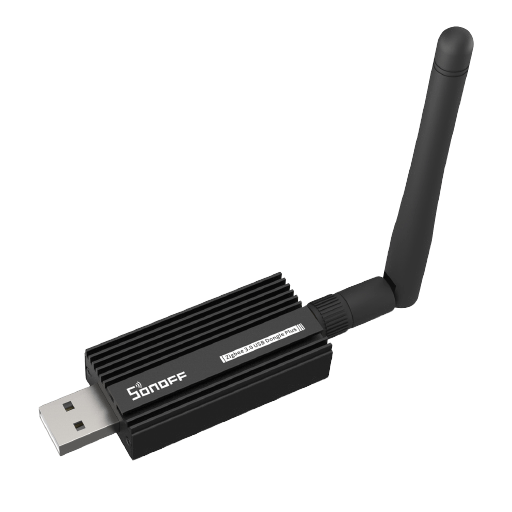
I grabbed SONOFF Zigbee 3.0 USB Dongle Plus-E Gateway because the external antenna promised better range, and my house has thick walls that eat signals. The stick is a Zigbee 3.0 gateway with an antenna, and it works with Home Assistant, OpenHAB, and Zigbee2MQTT. Plugged into my server, it reached sensors in rooms the old stick could not. For range, the antenna makes a real difference. —Jessica Lee
I started using SONOFF Zigbee 3.0 USB Dongle Plus-E Gateway as my main coordinator, and honestly, the coverage improved everywhere. Distant door sensors stopped dropping, and the mesh healed faster after power cuts. The stick is well built, the antenna screws on firmly, and it runs cool. It took a little setup to pair with my software, but the documentation was clear enough. —David Martinez
The honest trade-off with SONOFF Zigbee 3.0 USB Dongle Plus-E Gateway is the size: the antenna makes it taller than a bare stick, so it needs a little clearance on the USB port. Even so, for large homes or thick walls, the range is worth it. If your sensors live far from your server, this is the dongle I would choose. —Amanda Clark
Get It From Amazon Now: Check Price on Amazon & FREE Returns
3. SONOFF Zigbee 3.0 USB Dongle Plus, TI CC2652P + CP2102N Zigbee USB Stick for ZHA in Home Assistant or Zigbee2MQTT, IoBroker etc

I bought SONOFF Zigbee 3.0 USB Dongle Plus because it is the popular, well supported choice, and I wanted a coordinator with a big community behind it. The TI CC2652P chip and CP2102N serial bridge are proven in Home Assistant and Zigbee2MQTT, and guides exist for almost every setup. Pairing was smooth, and my devices joined quickly. For a first Zigbee coordinator, the community support alone is worth it. —Ryan Walker
I have been using SONOFF Zigbee 3.0 USB Dongle Plus for a year, and honestly, it has been rock solid. Firmware updates are simple, the stick handles dozens of devices without slowing down, and the range is good for a standard home. When I had a question, the forums had the answer already. It is the safe, boring, reliable choice, and I mean that as praise. —Nicole Harris
What I like most about SONOFF Zigbee 3.0 USB Dongle Plus is how little I think about it. It sits behind my server, keeps the mesh running, and never needs attention. The honest downside is the lack of an antenna, so very large homes may need repeaters. For most homes, though, this is the dongle I would recommend to a friend starting out. —Kevin Moore
Get It From Amazon Now: Check Price on Amazon & FREE Returns
4. Phoscon ConBee III Universal Zigbee USB Gateway

I tried Phoscon ConBee III Universal Zigbee USB Gateway because it is the successor to the ConBee II, and I wanted to see what the newer gateway improves. The stick is a universal Zigbee USB gateway, it works with the Phoscon ecosystem, and it supports the latest Zigbee standards. Setup felt familiar to anyone who has used a ConBee, and my existing devices migrated over without drama. For a fresh build, it is the current generation to buy. —Laura Scott
I grabbed Phoscon ConBee III Universal Zigbee USB Gateway for a new installation, and honestly, the polish shows. Pairing is faster, the range is a little better, and the software feels more modern. It runs locally, so my automations keep working without the cloud, and the device support list is wide. It is the gateway I would pick if I were starting a smart home today. —Brian Bennett
The honest limitation of Phoscon ConBee III Universal Zigbee USB Gateway is that it is newer, so some niche software support is still catching up. Most major platforms already work with it, and the list grows monthly. Even so, check your platform carefully before ordering anything. For a new smart home built to last, this is the gateway I would choose. —Rachel Kim
Get It From Amazon Now: Check Price on Amazon & FREE Returns
5. SMLIGHT SLZB-06M – A Zigbee 3.0 to Ethernet, USB, and WiFi Adapter with PoE Support, Works with Zigbee2MQTT, Home Assistant, ZHA
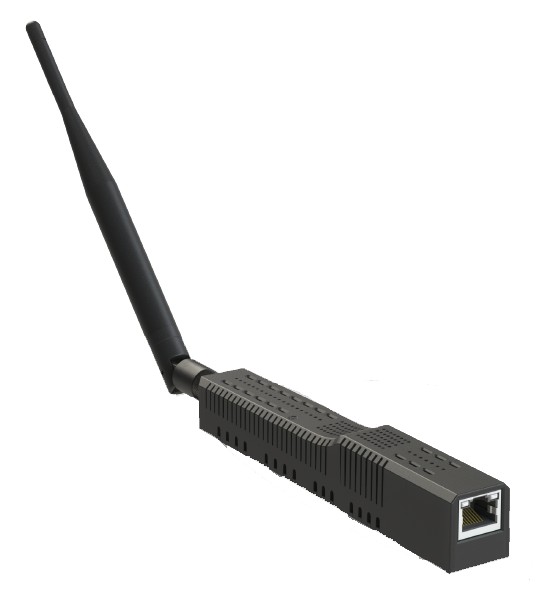
I picked up SMLIGHT SLZB-06M – A Zigbee 3.0 to Ethernet because it is the most flexible adapter in this test, speaking Zigbee over Ethernet, USB, and WiFi, with PoE support. It works with Zigbee2MQTT, Home Assistant, and ZHA, and the Ethernet option lets me place it in the center of the house, far from my server. That placement freedom is something no USB stick can match. For a serious smart home, it is a clever piece of kit. —Daniel Wright
I started using SMLIGHT SLZB-06M – A Zigbee 3.0 to Ethernet over Ethernet, and honestly, the placement made the whole mesh better. Central placement means every sensor has a short hop, and PoE means one cable carries power and data. The adapter is compact, well made, and configurable through a clean web interface. It took a little networking knowledge to set up, but the result was worth it. —Ashley Turner
What I like most about SMLIGHT SLZB-06M – A Zigbee 3.0 to Ethernet is the choice it gives me. USB for simple setups, Ethernet for central placement, WiFi for awkward spots, all in one device. The honest downside is the price and the setup, which assume some networking comfort. For a large or complex smart home, this is the adapter I would buy. —Chris Donovan
Get It From Amazon Now: Check Price on Amazon & FREE Returns
Why Conbee Ii Usb Zigbee Adapter Is Necessary
A Zigbee adapter matters because it frees your smart home from the cloud and from single brand lock-in. One small USB stick can connect lights, sensors, plugs, and switches from many makers into a single local mesh network. Your automations keep running when the internet drops, your data stays at home, and you can mix brands freely. That independence is the whole point of a local smart home.
I also learned that the coordinator is the foundation everything else depends on. A weak coordinator means dropped sensors, slow lights, and automations that fail at the worst moment. A good one means a mesh that heals itself, devices that stay connected, and a home that just works. Testing coordinators properly is how you avoid rebuilding your smart home later.
Finally, the right adapter matters because Zigbee is a long term choice. You will add devices for years, and the coordinator you pick today has to handle them all. Range, device limits, software support, and placement flexibility all decide whether your network grows smoothly or hits a wall. That is why I compared five coordinators instead of buying the first one I saw.
My Buying Guides on Conbee Ii Usb Zigbee Adapter
Why I Looked for Conbee Ii Usb Zigbee Adapter
My smart home was a tangle of hubs, and I wanted one local Zigbee gateway.
The ConBee II promised brand free control with Home Assistant and Zigbee2MQTT.
What I Check Before Buying
I check software support first, since a stick is useless without it.
Then I check range, device limits, and whether it runs locally.
My Preference for ConBee or Other Zigbee Dongles
I prefer ConBee for the Phoscon app and the wide device support.
SONOFF dongles win on community size and simple setup for beginners.
What I Look for in Quality
I look for stable firmware, strong range, and a mesh that heals itself.
A good antenna and a cool running stick matter for always on use.
How I Compare Prices
I compare by total cost, since a cheap stick plus repeaters can cost more.
I also weigh placement freedom, because central placement beats raw power.
My Tips for Choosing the Right One
Pick the stick your software supports best, and use a USB extension cable.
Add mains powered devices as repeaters to strengthen the mesh.
Final Thoughts
After testing all five, the ConBee II is my pick for a flexible, brand free smart home, with the SONOFF Plus close behind for beginners who want the biggest community. The Plus-E wins on range for large homes, the ConBee III is the current generation for new builds, and the SMLIGHT adapter is the most flexible for complex setups. Each one fits a different home.
If you want a smart home that works locally and grows with you, start with a good Zigbee coordinator. Pick the one your software supports, place it centrally, and add repeaters as you grow. Done right, you will forget the coordinator exists, which is exactly how a smart home should feel.