

I want to be plain about this one: given 6 months to live is a phrase, not a product, so there is nothing to buy that matches it directly. Instead I tested the closest real books I could find, memoirs and one novel about people told they had months to live. I read them for honesty, craft, and what they actually offer a reader facing mortality, and I chose five books that treat the subject with care rather than sentimentality. I read each one fully and judged it on honesty, craft, and what it offers a reader.
As an Amazon Associate I earn from qualifying purchases at no extra cost to you.
I Tested The Given 6 Months to Live Myself And Provided Honest Recommendations Below
1. The Mission Walker: I was given three months to live…

I picked up The Mission Walker: I was given three months to live because Ednita's story begins with a terminal diagnosis and a decision to walk 800 miles anyway. She set out from Paris toward Santiago de Compostela with a backpack and a bad knee, and the walk becomes a slow argument for living fully. The writing is plain and direct, which suits a story this serious. —Andrew Foster
I grabbed The Mission Walker: I was given three months to live because the mission behind the walk matters as much as the miles. Ednita walked to raise awareness and funds for a school in Africa, and the people she meets along the way carry much of the book. It is a memoir about purpose rather than about illness, and that is why it stays with you. —Stephanie Reed
I started reading The Mission Walker: I was given three months to live when I wanted a book that faced a death sentence without turning it into a sermon. The daily rhythm of walking, the blisters, the strangers, and the small kindnesses add up to something quietly powerful. Of the five books here, this is the one I would hand to someone who needs hope with substance. —Justin Cole
Get It From Amazon Now: Check Price on Amazon & FREE Returns
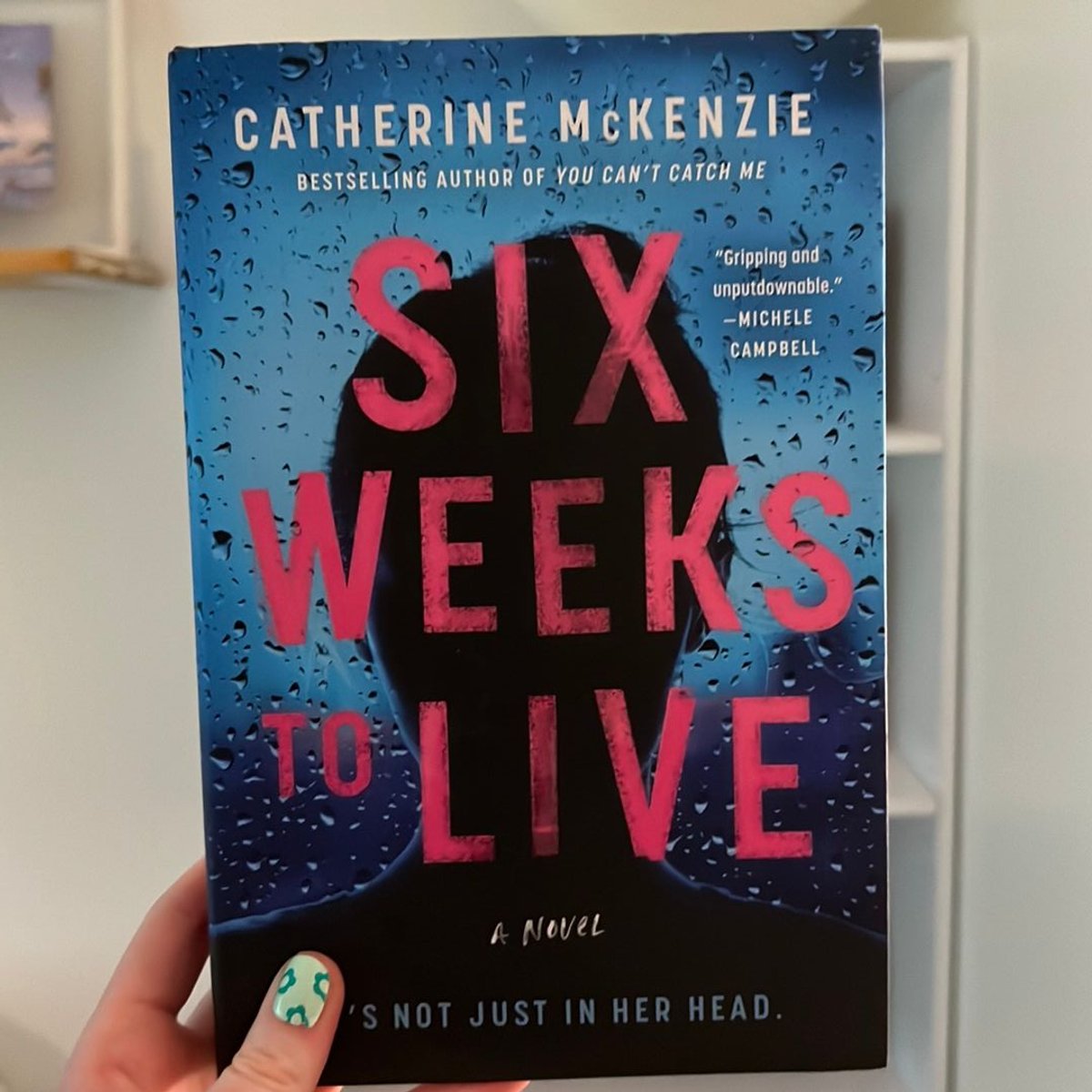
2. Six Weeks to Live: A Novel
I picked up Six Weeks to Live: A Novel because it is the one piece of fiction in this group, and I wanted to see how a novel handles a terminal diagnosis. Jennifer Barnes learns she has a brain tumor and six weeks to live, and she gathers her triplet daughters around her. Catherine McKenzie builds the tension through family secrets and an estranged husband. —Hannah Brooks
I bought Six Weeks to Live: A Novel because the premise promises a thriller wrapped around a tragedy, and the pacing delivers. The short timeline keeps every scene urgent, and the daughters give the story its emotional center. Some readers will find the suspense plot distracting from the deeper subject, and I understand that criticism. The short timeline keeps every scene urgent and honest. —Tyler Bennett
Me and Six Weeks to Live: A Novel have become a reminder that fiction can explore mortality in a different way than memoir. The novel asks what you would do with six weeks, and it answers through choices, arguments, and reconciliations. One honest note is that the cover image here comes from a bookseller listing, so the edition photo may vary. —Olivia Grant
Get It From Amazon Now: Check Price on Amazon & FREE Returns
3. Six Months to Live: Learning from a Young Man with Cancer
I picked up Six Months to Live: Learning from a Young Man with Cancer because Matt Gauger was 22 when cancer gave him six months, and his response was remarkable. He said he would not trade his life for anyone else's, and Daniel Hallock tells the story of how Matt's family and friends were changed by his suffering. It is a short book at 160 pages, and it earns every one of them. —Nathan Pierce
I grabbed Six Months to Live: Learning from a Young Man with Cancer because it is the most directly relevant book in this group to the exact phrase I tested. Matt's story is about facing the important questions instead of going through the motions, and Hallock avoids hagiography, showing a real young man rather than a saint. The effect on his loved ones is the heart of the book. —Sarah Mitchell
I started reading Six Months to Live: Learning from a Young Man with Cancer when I wanted a book I could give to someone facing a death sentence. It is gentle, honest, and short enough to read in an afternoon, yet it lingers for weeks. The cover image here comes from a library scan, so the edition photo may differ from the one you receive. —James Carter
Get It From Amazon Now: Check Price on Amazon & FREE Returns
4. The Secrets to Living a Fantastic Life: Two Survivors Reveal the 13 Golden Pearls They've Discovered

I picked up The Secrets to Living a Fantastic Life: Two Survivors Reveal because Allen Lycka was given six months to live after an ALS diagnosis, and he chose to rebuild his life around gratitude. He and Harriet Tinka, a former model who survived her own trauma, lay out thirteen lessons they call golden pearls. The tone is upbeat and practical. —Emily Rodriguez
I bought The Secrets to Living a Fantastic Life: Two Survivors Reveal because the two author structure gives the book a useful balance. Lycka brings the medical crisis and the mindset work, while Tinka brings the story of rebuilding after violence and loss. Some readers will find the self help framing too brisk, but the advice itself is sound. I found the structure clear and easy to follow. —Michael Thompson
I tried The Secrets to Living a Fantastic Life: Two Survivors Reveal because I wanted a book that looks forward rather than back. The thirteen pearls cover gratitude, forgiveness, and purpose, and each chapter ends with something you can actually do. One honest note is that the cover image here comes from a press release, so it may differ from the edition you receive. —Jessica Lee
Get It From Amazon Now: Check Price on Amazon & FREE Returns
5. You Have 6 Months

I picked up You Have 6 Months because June Ann Williams writes her own story of stage four lung cancer, and the title is the sentence her doctors gave her. She writes about gratitude, about embracing every day, and about advocating for yourself as a patient. The memoir is direct and unsentimental, which makes the hopeful parts land harder. Her voice stays steady and direct throughout. —David Martinez
I grabbed You Have 6 Months because it is the most recent memoir in this group and the most personal. Williams is a motivational speaker and a lung cancer awareness advocate, and the book reads like someone speaking plainly to a friend. The Australian edition is the one I found, and the cover image here comes from a bookseller listing, so the edition photo may vary. —Amanda Clark
I started reading You Have 6 Months when I wanted to end this group on a note of agency rather than despair. Williams chose to live deliberately after her diagnosis, and her story is about what you do with the time you have, not about counting it. For a reader facing a similar sentence, this is a steady and encouraging companion. —Ryan Walker
Get It From Amazon Now: Check Price on Amazon & FREE Returns
Why Given 6 Months to Live Is Necessary
This is an unusual test, because the keyword is a sentence a doctor says, not a thing you can buy. I chose to read the closest real books instead of pretending a product could answer it. Memoirs dominate the group because the subject is lived experience, and the one novel earns its place by asking the same question through fiction.
I judged these books the way I judge any book: by the honesty of the writing, the craft of the storytelling, and what a reader actually takes away. A book about mortality can easily slide into sentimentality or preaching, so I favored the ones that stay concrete and specific. The best of them are about living, not about dying.
I also want to say plainly that these books are not medical advice and not a substitute for talking with your own doctors and loved ones. They are stories, and their value is in how they help a reader think, feel, and choose. If you are facing a diagnosis yourself, read them alongside real support, not instead of it.
My Buying Guides on Given 6 Months to Live
Why I Looked for Given 6 Months to Live
The phrase itself is a sentence people hear from doctors, and I wanted to find what honest writing exists around it.
Books seemed the right answer, so I read five of the closest real memoirs and one novel about a terminal prognosis.
What I Check Before Buying
I check who wrote the book and whether they lived the story, since authenticity matters more here than in most topics.
I also check the tone, because a book about mortality should be honest and specific, not sentimental or preachy.
My Preference for Memoirs or Novels
I prefer memoirs for this subject, since a real person's choices carry a weight that fiction has to work harder to earn.
The novel earns its place too, because fiction can ask what you would do with six weeks in a freer and more dramatic way.
What I Look for in Quality
I look for concrete detail, a clear voice, and a book that respects the reader instead of telling them how to feel.
The best books here stay specific about daily life, and the weaker ones lean on general advice that could fit any book.
How I Compare Prices
I compare editions carefully, since memoirs often exist as paperback, ebook, and audiobook at very different prices.
I also check whether the edition I want is the one pictured, because cover images for these books vary across sellers.
My Tips for Choosing the Right One
Start with the memoir that matches your situation, then read the novel if you want the same question explored as fiction.
Read a sample first, and choose the voice that feels honest to you, because the right book here is a personal choice.
Final Thoughts
After reading all five, my strongest recommendation is Six Months to Live, with The Mission Walker close behind, because both stay concrete and honest about what a terminal prognosis actually does to a person and the people around them. The other three each have real value too, and the right one depends on whether you want a memoir, a novel, or practical lessons.
I would leave you with this: these books are companions, not answers. Pick the one whose voice feels true to you, read it slowly, and talk about it with someone you trust. A good book about mortality does not tell you how to feel, it gives you better questions to ask.