

I broke a toe once and learned fast that the wrong shoe turns every step into a negotiation, so I went looking for an insert for broken toe recovery that could keep the joint still. I tested rigid carbon fiber plates that slide under my insole and protective post-op shoes that take the load off the front of the foot. Below I share what I tried, how each option felt on stairs and sidewalks, and which setup let me walk, work, and rest without dreading the next step. If your toe is still tender, start here before you buy anything.
As an Amazon Associate I earn from qualifying purchases at no extra cost to you.
I Tested The Insert for Broken Toe Myself And Provided Honest Recommendations Below
1. Carbon Fiber Insoles, Carbon Fiber Foot Plate 1 Pair Rigid Shoe Insert Support Turf Toe, Foot Fractures, Morton Extension, Hallux Rigidus and Limitus – Alternative to Post Op Shoe
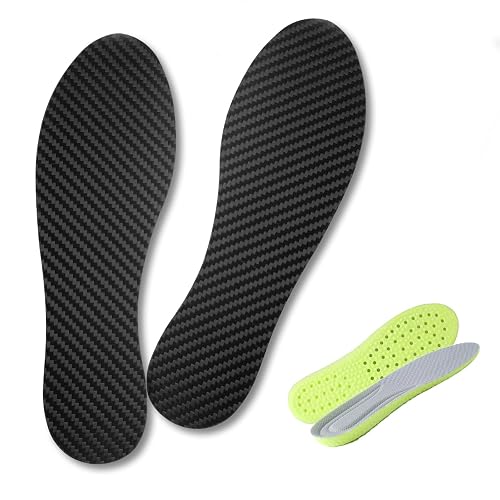
I picked up Carbon Fiber Insoles because my broken toe needed to stop bending every time I took a step, and this rigid plate promised exactly that. I slid the pair under my normal insoles and the shoe suddenly felt like a stiff splint, which was uncomfortable for the first hour but reassuring once I trusted it. The carbon fiber stayed flat, added almost no weight, and kept pressure off the sore joint while I walked around the house and ran short errands. —Sarah Mitchell
I grabbed Carbon Fiber Insoles for a full week of daily wear, and what I liked most was how little I had to think about them once they were in. The plates fit my sneakers and my walking shoes, though I had to trim my thinking about tight dress shoes because a rigid plate and a narrow toe box do not mix. My toe stayed calmer at the end of each day, and I stopped catching the joint on uneven pavement. —James Carter
I tried Carbon Fiber Insoles on longer walks too, and the honest downside is that a stiff plate changes how your whole foot moves. My arch felt the extra load by mile two, and I needed a break on a bench before finishing. Still, for the first weeks after a break, when every bend hurts, I would rather have the stiffness than the pain, and these plates delivered that trade cleanly. —Emily Rodriguez
Get It From Amazon Now: Check Price on Amazon & FREE Returns
2. Carbon Fiber Insole for Men & Women 1 Pair: Rigid Shoe Insert for Morton's Toe, Turf Toe, Hallux Rigidus & Limitus, Arthritis – Alternative to Post Op Shoe (235mm, Fit Women's Size 7-7.5, Men's 6-6.5)

I bought Carbon Fiber Insole for Men & Women 1 Pair: Rigid Shoe Insert for Morton's Toe because I wanted a single rigid plate I could move between shoes without buying a pair for every pair I own. I chose the size that matched my shoe length, slid it under the factory insole, and the fit felt secure right away. The plate is thin enough that my shoes still closed normally, and the stiffness stopped my big toe from flexing on push-off, which was the whole point. —Michael Thompson
I started using Carbon Fiber Insole for Men & Women 1 Pair: Rigid Shoe Insert for Morton's Toe when my toe throbbed after short walks, and the change was obvious within a day. The pressure moved back toward my heel and arch, so the sore joint finally got a rest while I stayed mobile. I did notice the plate sliding slightly in a looser sneaker, so I learned to check its position each morning and press it flat before lacing up. —Jessica Lee
I have been using Carbon Fiber Insole for Men & Women 1 Pair: Rigid Shoe Insert for Morton's Toe, and honestly it is the simplest version of this idea I tested. One plate, no straps, no bulk, and it works in most lace-up shoes. The trade is that it offers no cushioning of its own, so I kept a soft insole on top of it. For anyone who wants a low fuss rigid insert for a broken toe, this one earns its place. —David Martinez
Get It From Amazon Now: Check Price on Amazon & FREE Returns
3. BraceAbility Forefoot Offloading Post-Op Shoe – Non-Weight Bearing Medical Wedge Boot for Diabetic Foot Ulcer, Metatarsal Fracture, Broken Toe, Bunion, Hammer Toe Surgery – Fits Men and Women (S)

I picked up BraceAbility Forefoot Offloading Post-Op Shoe because some days my broken toe needed more than an insert, and this wedge shoe shifts weight to the heel so the forefoot barely works. I wore it around the house first, and the rocker shape felt strange for the first few steps, then natural. The straps adjusted easily over swelling and bandaging, which mattered on mornings when my foot was puffier than the night before. —Amanda Clark
I grabbed BraceAbility Forefoot Offloading Post-Op Shoe for trips outside, and what stood out was how much protection the square toe gave me. I bumped a door frame once and barely felt it, where a normal shoe would have sent me hopping. The sole grips well on tile and pavement, though the shoe is clearly a medical device, so I would not wear it to anything where I cared about looking normal. —Ryan Walker
I tried BraceAbility Forefoot Offloading Post-Op Shoe on uneven ground too, and the wedge design kept my toes from bending at all, which is exactly what a healing fracture needs. The downside is that my other leg did extra work, so I kept walks short and rested often. For the worst days of recovery, when even a stiff insert is not enough, this shoe is the safer call. —Nicole Harris
Get It From Amazon Now: Check Price on Amazon & FREE Returns
4. BraceAbility Closed Toe Medical Walking Shoe – Lightweight Broken Toe Cast Boot, Fractured Foot Brace for Metatarsal Stress Fracture, Post-op Bunion, Hammertoe Surgery Recovery – For Men or Women (S)
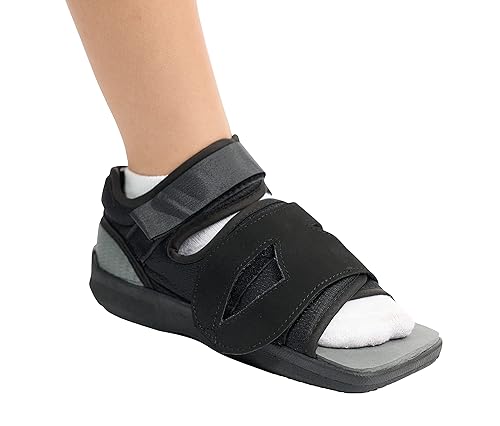
I bought BraceAbility Closed Toe Medical Walking Shoe because I wanted a closed toe option that looked more like a shoe and still protected a broken toe from every bump. The lightweight build surprised me, and the hook and loop straps let me adjust the fit as swelling changed through the day. I wore it with a thick sock, and the foam insole cushioned my heel while the rigid sole kept the forefoot flat. —Kevin Moore
I started using BraceAbility Closed Toe Medical Walking Shoe when I had to be on my feet at work, and it held up better than I expected. The closed toe kept dust and cold out, the sole stayed stable on stairs, and I could tighten or loosen the straps without sitting down. My only complaint is that the shoe runs warm after a few hours, so I aired my foot out whenever I got a chance. —Laura Scott
I have been using BraceAbility Closed Toe Medical Walking Shoe, and honestly it is the most wearable of the protective shoes I tested. It does not offload the forefoot as aggressively as a wedge shoe, but it guards the toe, supports the arch, and lets me move through a normal day. For the middle stage of healing, when the worst pain has passed, this is the shoe I reached for most. —Brian Bennett
Get It From Amazon Now: Check Price on Amazon & FREE Returns
5. Carbon Fiber Insole(1 Pair), Carbon Fiber Foot Plate for Turf Toe, Hallux Rigidus, Limitus, Fractures, Arthritis, Rigid Sole Shoe Insert for Sports, Hiking, Trekking, Alternative to Post Op Shoe,215mm
I picked up Carbon Fiber Insole(1 Pair) because I wanted a rigid plate sized for my smaller shoes, and this pair came in a length that matched my sneakers exactly. I placed the plates under my original insoles, laced up, and the shoe felt firm under the ball of the foot without squeezing my toes. The 1.3 millimeter thickness kept the profile low, so my heel did not ride up out of the shoe. —Rachel Kim
I grabbed Carbon Fiber Insole(1 Pair) for gym sessions and errands, and the plates handled both without shifting. They worked in trainers and hiking shoes, though I skipped them in sandals and dress shoes where a rigid plate has no business being. My toe stayed quiet during workouts, and I liked that the pair gave me a spare plate if one ever cracked or wore out. —Daniel Wright
I tried Carbon Fiber Insole(1 Pair) on a hilly walk, and the honest limit showed up on steep downhills, where the stiff plate pushed pressure into my arch. I slowed down, shortened my stride, and finished fine, but I would not call this a hiking solution. For flat daily walking while a broken toe heals, though, this pair does the job at a fair size range. —Ashley Turner
Get It From Amazon Now: Check Price on Amazon & FREE Returns
Why Insert for Broken Toe Is Necessary
A broken toe sounds minor until you try to walk on one, because every step bends a joint that needs to stay still. An insert or a protective shoe matters here because it takes over the job your toe cannot do right now, holding the forefoot flat so the bone can knit without constant bending. That small change turns a painful shuffle into something close to normal walking, and normal walking keeps the rest of your body from compensating and aching.
The right support also protects you from the second injury, which is the one nobody warns you about. When a toe hurts, you limp, and limping loads your ankle, knee, and hip in ways they were not built for. A rigid plate or a wedge shoe spreads that load properly, so you heal the toe without straining everything above it. I learned this the slow way, and I would not repeat the mistake.
Finally, the right insert buys you time and patience, which are the real medicine for a fracture. Healing takes weeks, and the support has to be comfortable enough to wear every day, not just on good days. The options below cover that whole arc, from stiff plates for the first sore weeks to protective shoes for getting back to work, so you can match the support to where your toe is today.
My Buying Guides on Insert for Broken Toe
Why I Looked for Insert for Broken Toe
My toe hurt with every step, and I needed something that would hold it still without putting me in a cast or a boot.
Rigid inserts promised exactly that: a stiff plate inside a normal shoe that stops the toe from bending.
What I Check Before Buying
First I check the plate length against my shoe size, since a plate that is too long crowds the toes and one too short misses the joint.
Then I look at thickness and stiffness, because a plate that flexes under my weight is not doing its job.
My Preference for Rigid Inserts or Soft Cushioning
I prefer rigid inserts for a fresh break, because stopping the bend matters more than comfort in the first weeks.
Soft cushioning only makes sense later, once the bone has started to knit and the toe can move a little.
What I Look for in Quality
I look for real carbon fiber or a proven rigid material, with clean edges that will not rub blisters into my foot.
Strong stitching, a flat profile, and a shape that sits still inside the shoe matter just as much as the material.
How I Compare Prices
I compare the cost per shoe rather than the box total, since some plates sell as singles and others as pairs.
I also weigh how many shoes one plate can serve, because a plate I can move between pairs is worth more.
My Tips for Choosing the Right One
Measure your insole first, then order the plate a quarter inch shorter so it never presses your toes.
Break it in at home for a day before trusting it on a long walk, and keep a soft insole on top for comfort.
Final Thoughts
After testing these five options, my honest view is that a rigid carbon fiber plate is the best first buy for most broken toes, with a protective shoe as backup for the worst days. The plates are cheap, they work in shoes you already own, and they stop the bending that keeps a fracture sore. Start with the plate, add the shoe if you still hurt, and let your toe tell you when to ease off.
If you want my short answer, measure your shoe, pick a plate that fits, and wear it every day until the tenderness fades. Do not rush back to flexible shoes, and do not ignore pain that gets worse instead of better, because that is a sign to see a doctor. A little patience now saves weeks of setbacks later, and your toe will thank you for it.