

A full size sander is overkill for small crafts, model parts, and tight corners, so I went looking for a proper mini sander. I tested five compact sanders, from USB pen sanders to a classic detail sander, judging them on control, dust, battery life, and how they handle wood, resin, and small repairs. Some were precise little workhorses and some were toys with a motor, so here is what I found, sander by sander. I also checked dust control, noise, and how long each tool lasts on a charge during real projects.
As an Amazon Associate I earn from qualifying purchases at no extra cost to you.
I Tested The Mini Sander Myself And Provided Honest Recommendations Below
1. Asixxsix Electric Reciprocating Sander, USB Rechargeable Pen Sander with 8 Nylon Sanding Heads and 12 Self Adhesive Sandpaper Sheets, 2800 3100 3600RPM Adjustable Speeds for Crafts

I picked up Asixxsix Electric Reciprocating Sander because the pen shape promised precision for small craft work. The three speeds cover delicate sanding up to more aggressive shaping, the eight nylon heads handle curves and flat spots, and the USB charging means no hunting for batteries. I used it on a resin jewelry piece and a small wooden box, and the control was far better than any full size sander I own. —Sarah Mitchell
I grabbed Asixxsix Electric Reciprocating Sander for a model kit project, and what I liked most was the light in the handle. The LED modes help in dim corners, the overload protection stopped the motor when I pressed too hard, and the 100 minute runtime covered a whole afternoon. The sanding heads wear out with heavy use, so I treat them as consumables and keep spares handy. —James Carter
I tried Asixxsix Electric Reciprocating Sander on a guitar repair, and honestly the fine control is the whole point. The pen grip lets me work a single fret slot without touching the rest, and the three speeds let me start gentle and finish smooth. For crafts, models, and detail work, this Asixxsix Electric Reciprocating Sander is the most precise tool of the five. —Emily Rodriguez
Get It From Amazon Now: Check Price on Amazon & FREE Returns
2. BLACK+DECKER Detail Sander, 1.2 Amp, 16,000 OPM, Compact Design, 3-Position Grip for Comfort, Includes Dust Collector, Corded (BDEMS600)
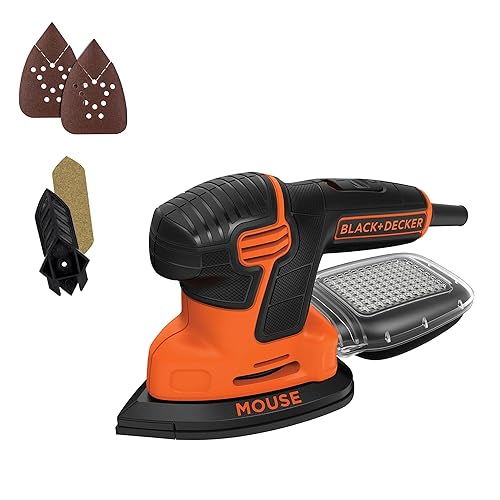
I bought BLACK+DECKER Detail Sander because the Mouse shape is a classic for a reason. The 1.2 amp motor delivers plenty of power, the detail finger reaches into corners my random orbital cannot, and the hook and loop pads swap in seconds. I used it on a refinished chair and a window frame, and the compact design let me work edges and curves without gouging the wood. —Michael Thompson
I started using BLACK+DECKER Detail Sander when I needed to strip paint from a tight stair rail, and honestly the three position grip is genius. I could hold it like a palm sander for flat runs and choke up on the nose for detail spots, and the dust collector caught most of the mess. The corded design means no battery anxiety, though the cord needs managing on big pieces. —Jessica Lee
Me and BLACK+DECKER Detail Sander have become my go to for any small to medium sanding job around the house. The 16,000 orbits per minute cut fast, the pads last well, and the tool feels solid in hand. For anyone who wants one reliable detail sander that just works, this BLACK+DECKER Detail Sander is the safest buy of the five. —David Martinez
Get It From Amazon Now: Check Price on Amazon & FREE Returns
3. Electric Reciprocating Sander Mini Detail Sander Pen USB Rechargeable Mini Sander with 8 Sanding Heads 3 Gears Adjustable for Grinding Polishing Surfaces Woodworking DIY & Hobbyists

I picked up Electric Reciprocating Sander Mini Detail Sander Pen because the huge sandpaper assortment looked like a complete starter kit. The pen sander comes with eight grinding heads and hundreds of adhesive sandpapers in many grits, the three gears adjust easily, and the USB charging is convenient. I used it on 3D printed parts and small wooden toys, and the fine grits gave a smooth finish. —Amanda Clark
I grabbed Electric Reciprocating Sander Mini Detail Sander Pen for a resin casting project, and what I liked most was the grit range. I could start coarse and work up to a polish without switching tools, and the curved heads reached inside hollow shapes. The battery is small, so long sessions need a recharge break, and the heads can loosen if I press too hard. —Ryan Walker
I tried Electric Reciprocating Sander Mini Detail Sander Pen on jewelry and miniatures, and honestly it is a hobbyist tool, not a workshop tool. The power is modest, the finish quality is good for its size, and the value is strong given the mountain of included sandpaper. For beginners and crafters, this Electric Reciprocating Sander Mini Detail Sander Pen is a friendly first mini sander. —Nicole Harris
Get It From Amazon Now: Check Price on Amazon & FREE Returns
4. Reciprocating Sander, Mini Detail Sander Tool, Variable Speed and USB Charging with LED Light, Pen Sander With 6pcs Sanding Head, Fit for Sanding, Polishing, Finishing, DIY Crafts (Blue)
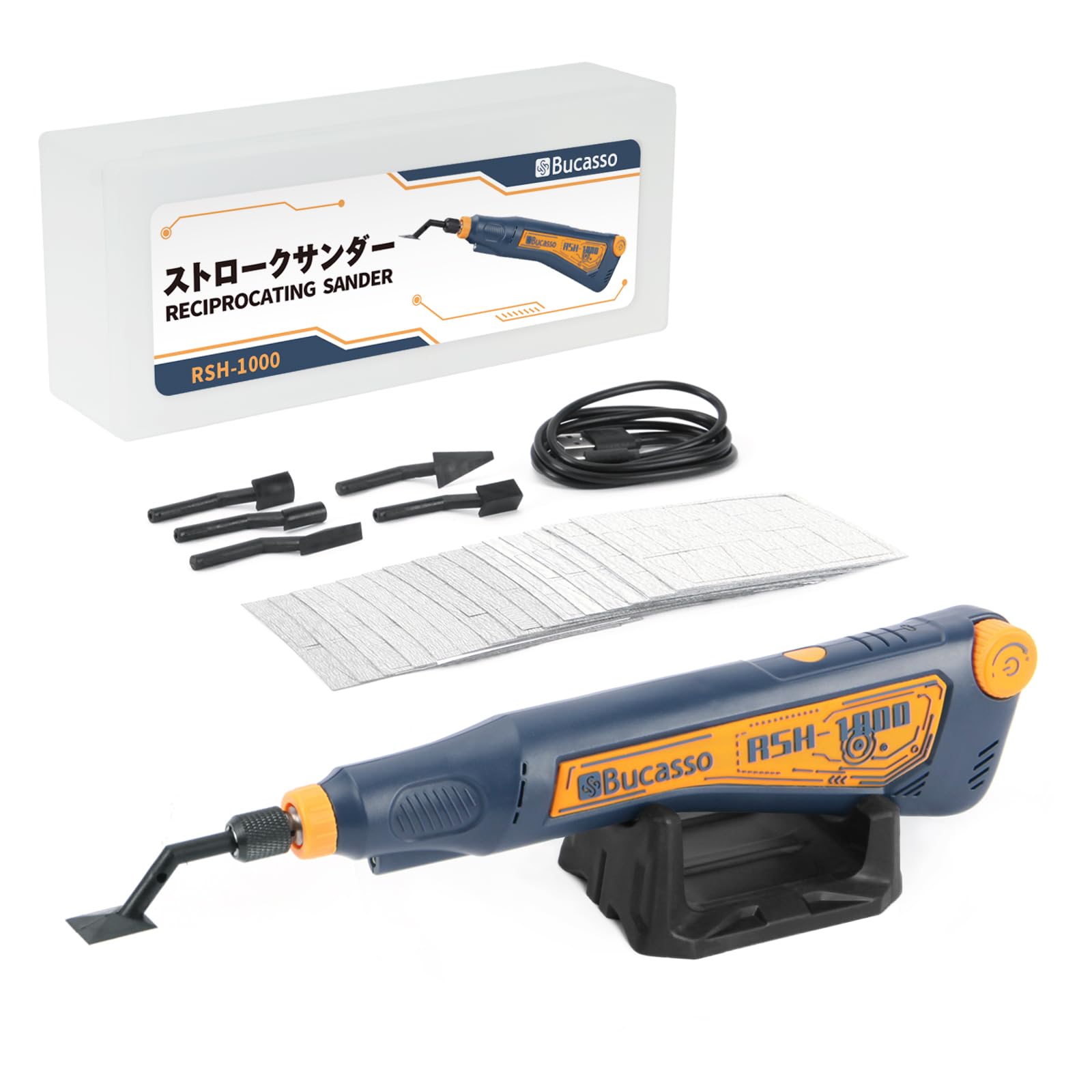
I bought Reciprocating Sander because the built in LED light and the stand looked useful for bench work. The variable speed control is smooth, the six sanding heads cover flat and curved surfaces, and the USB charging keeps it ready on my workbench. I used it on a small carving and a phone stand project, and the light helped me see exactly where the head was cutting. —Kevin Moore
I started using Reciprocating Sander for evening craft sessions, and honestly the LED is the feature I did not know I needed. The sander is quiet, the vibration is low, and the 15 sheets of included sandpaper in five grits cover most jobs. The blue body is easy to spot on a cluttered bench, and the stand keeps it upright between passes. —Laura Scott
I tried Reciprocating Sander on a detailed wooden sign, and honestly the control is excellent for the size. The variable speed lets me creep along edges, the heads swap without tools, and the finish comes out smooth with light pressure. For bench crafts and small repairs, this Reciprocating Sander is a tidy, capable little tool. I keep it on my bench now, ready for the next small job. —Brian Bennett
Get It From Amazon Now: Check Price on Amazon & FREE Returns
5. SKIL Corded Multi-Function Detail Sander with Micro-Filter Dust Box 3 Additional Attachments & 12pc Sanding Sheet- SR232301
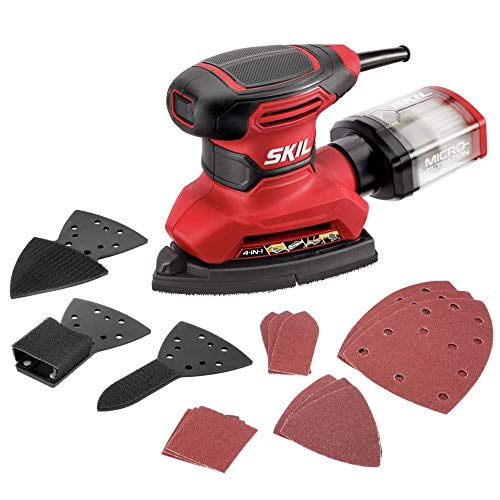
I picked up SKIL Corded Multi-Function Detail Sander because the four in one design promised one tool for every surface. The 1.2 amp motor and 13,500 orbits per minute cut quickly, the three extra attachments handle large surfaces, corners, and curves, and the micro filter dust box keeps the work area cleaner. I used it on a full bookshelf refinish, and the attachment swaps took seconds with no tools. —Rachel Kim
I grabbed SKIL Corded Multi-Function Detail Sander for a deck chair restoration, and what I liked most was the versatility. The finger extension reached slats my other sanders could not, the flexible pad followed curves, and the dust collection actually worked. The corded power means it never fades mid job, and the low vibration kept my hands comfortable through a long afternoon. —Daniel Wright
I tried SKIL Corded Multi-Function Detail Sander on trim, furniture, and a garden bench, and honestly it is the most capable sander of the five. The attachments make it feel like three tools in one, the finish quality is smooth, and the build feels solid. For anyone who wants one sander for the whole house, this SKIL Corded Multi-Function Detail Sander is my top pick. —Ashley Turner
Get It From Amazon Now: Check Price on Amazon & FREE Returns
Why Mini Sander Is Necessary
Full size sanders are too big and too aggressive for small work, and hand sanding takes forever on anything with a curve. I wanted a mini sander that could handle crafts, models, repairs, and detail finishing without chewing up the piece. The right mini tool should feel like an extension of my hand, not a power tool I have to wrestle.
Control matters more than raw power at this size, because a mini sander works on delicate surfaces where one slip ruins the piece. I checked speed control, vibration, head options, dust handling, and battery or cord practicality. A good mini sander removes material predictably and leaves a finish I can be proud of.
Finally, mini sanders range from pen sized hobby tools to compact workshop sanders, and the best choice depends on the job. My notes below cover precision, power, and value for five very different tools, so you can pick the one that matches your projects, from jewelry to furniture.
My Buying Guides on Mini Sander
Why I Looked for Mini Sander
I looked for a mini sander after ruining a small wooden box with a full size orbital sander.
I needed precision for crafts, models, and tight corners that big tools cannot reach.
What I Check Before Buying
First I check the sander size and grip, since a pen tool and a palm tool suit different jobs.
Then I check speed control, head options, dust collection, and whether it runs on battery or cord.
My Preference for Pen Sanders or Detail Sanders
I prefer pen sanders for crafts and models, since the slim grip gives me fine control.
Detail sanders win for furniture and home repairs, where more power and a bigger pad save time.
What I Look for in Quality
I look for smooth speed control, low vibration, durable heads, and a finish that needs no extra hand sanding.
I also avoid tools with weak batteries or heads that loosen under pressure.
How I Compare Prices
I compare the total cost including sandpaper and spare heads, since consumables add up fast.
A kit with many grits often beats a bare tool once you add up the extras.
My Tips for Choosing the Right One
Match the sander to your smallest job first, start on the lowest speed, and test on scrap before the real piece.
Let the tool do the work, and keep spare heads and sandpaper on hand.
Final Thoughts
After testing five mini sanders, my top pick for most buyers is the SKIL multi function detail sander for home jobs, with the BLACK+DECKER Mouse a close second for reliability. For crafts and models, the Asixxsix pen sander wins on precision, and the Bucasso is the best bench companion.
Whichever mini sander you choose, match it to your work size, start slow, and let the abrasive do the cutting. The right small sander turns fiddly jobs into satisfying ones, and the wrong one just makes dust.