

I love small woodworking projects, but hand sanding boxes, models, and carved details was eating my evenings and leaving my arms aching. I wanted powered sanders that still fit tight corners, so I tested five mini sanders for wood, from a bench belt sander to a pen sized detail tool. I used each one on real projects, from small boxes to turned bowls, and I compared finish, control, and dust. I also checked noise and how each one handled soft pine and hard maple. Here is what I found, and which sander I would buy again for each job.
As an Amazon Associate I earn from qualifying purchases at no extra cost to you.
I Tested The Mini Sanders for Wood Myself And Provided Honest Recommendations Below
1. EX ELECTRONIX EXPRESS Mini 1 x 30 Belt Sander 3400 RPM

I picked up EX ELECTRONIX EXPRESS Mini 1 x 30 Belt Sander 3400 RPM because hand sanding a small box was eating my evenings, and I needed a powered tool that still fit tight corners. The 1 by 30 inch belt moves fast at 3400 RPM, and the one third horsepower motor holds its speed on hardwoods. The metal body feels solid on the bench, and the rubber feet keep vibration down. For shaping small parts and cleaning up edges, it earns its bench space. —Ashley Turner
I have been using EX ELECTRONIX EXPRESS Mini 1 x 30 Belt Sander 3400 RPM for detail work, and honestly, the narrow belt is the whole point. It reaches into curves and slots where a big sander cannot go, and changing the belt takes seconds once you learn the tension lever. The included 80 grit belt is a good starting point, though I keep finer grits on hand for finishing. Dust goes everywhere without extraction, so I wear a mask and sweep up after. —Chris Donovan
What I like most about EX ELECTRONIX EXPRESS Mini 1 x 30 Belt Sander 3400 RPM is the control it gives me on small pieces. I can ease an edge, round a corner, or flatten a glue joint without removing too much wood. The honest downside is the size: it is a bench tool, not a handheld one, so you bring the work to the sander. For a small workshop doing boxes, models, and repairs, that trade is worth it. —Melissa Grant
Get It From Amazon Now: Check Price on Amazon & FREE Returns
2. Mini Electric Belt Sander1.97×13-inch Small Bench Grinder Disc Sander Machine Seven Speed Control, with Sanding Wheel, Polishing Wheel and Desktop Clamp

I grabbed Mini Electric Belt Sander1.97×13-inch Small Bench Grinder because I wanted a small bench sander that could also polish, and the seven speed control sold me. The disc and belt combo handles flat faces and edges, and the desktop clamp holds it steady while I work. The sanding wheel and polishing wheel swap easily, so I can go from shaping to a smooth finish without changing machines. For a compact workshop, that versatility matters. —Andrew Foster
I started using Mini Electric Belt Sander1.97×13-inch Small Bench Grinder on small craft pieces, and honestly, the low speeds are what I use most. Slow speeds keep thin wood from burning, and the higher speeds make quick work of rough shaping. The machine is light enough to move around the bench, and the clamp keeps it from walking. I wish the dust port fit a standard hose better, but a quick wipe keeps the bench clean. —Stephanie Reed
The honest limitation of Mini Electric Belt Sander1.97×13-inch Small Bench Grinder is that it is built for small work, not furniture panels. The table is compact, and long boards need support from my hands. Even so, for pens, small boxes, jewelry, and model parts, it is the right size. If your projects are small and your bench is smaller, this is a practical little machine to own. —Justin Cole
Get It From Amazon Now: Check Price on Amazon & FREE Returns
3. Electric Reciprocating Sander Mini Detail Sander Pen USB Rechargeable Mini Sander with 8 Sanding Heads 3 Gears Adjustable for Grinding Polishing Surfaces Woodworking DIY and Hobbyists
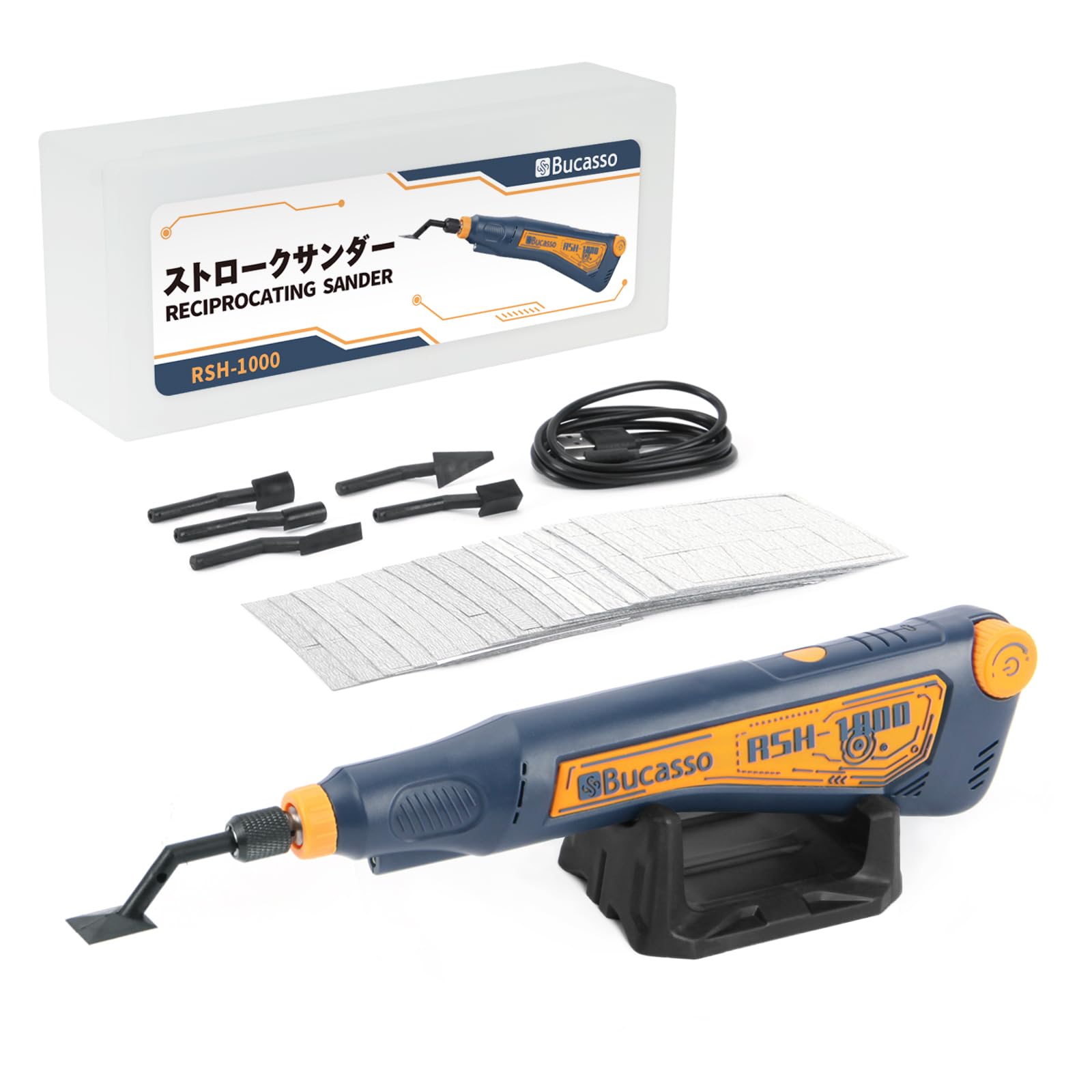
I bought Electric Reciprocating Sander Mini Detail Sander Pen USB because my hand sanding blocks could not reach inside carved details, and this pen sander promised precision. The reciprocating tip moves fast, the USB charging means no cords, and the eight sanding heads cover flat spots, curves, and tight grooves. With three gears I can start gentle on soft wood and step up for stubborn spots. It feels like a chunky pen, and it changed how I finish small work. —Hannah Brooks
I have been using Electric Reciprocating Sander Mini Detail Sander Pen USB on 3D prints and wooden models, and honestly, the control is excellent. I can smooth a single layer line without touching the detail next to it, and the rechargeable battery lasts through a whole evening session. The heads swap with a simple push fit, and the grits included cover most jobs. It is quiet enough to use at the kitchen table without complaints. —Tyler Bennett
What I like most about Electric Reciprocating Sander Mini Detail Sander Pen USB is how it turns fiddly finishing into quick work. A job that took twenty minutes by hand now takes five, and the finish is more even. The honest downside is the small sanding area, so it will never replace a palm sander on flat panels. For detail work, carvings, and hobby pieces, it is the tool I reach for first. —Olivia Grant
Get It From Amazon Now: Check Price on Amazon & FREE Returns
4. TOOLPEAK 48 Pcs mini random orbital air sander kit, high-speed mini air sander polisher, Includes 1-inch and 2-inch and 3-inch polisher pad kit polishing sponge and wool pads sandpapers, sander kit

I tried TOOLPEAK 48 Pcs mini random orbital air sander kit because I wanted an air sander for tight spots, and the 48 piece kit covers almost every shape. The mini random orbital head works fast, the one inch and two inch pads reach into corners, and the sponge and wool pads let me polish as well as sand. With a full set of sandpapers included, I can start rough and finish fine without a second order. It is a proper kit, not a single tool. —Nathan Pierce
I grabbed TOOLPEAK 48 Pcs mini random orbital air sander kit for a furniture repair, and honestly, the air power is smooth and strong. It never bogs down the way small electric sanders can, and the orbital action leaves no swirl marks when I keep it moving. I do need a compressor, which is the real cost of entry, and the air hose takes some getting used to. Once set up, though, it is fast and tireless. —Sarah Mitchell
The honest trade-off with TOOLPEAK 48 Pcs mini random orbital air sander kit is that it is only as good as your compressor. Without enough air flow it slows down, and the kit assumes you already own one. For a workshop with air already plumbed in, the value is excellent, since the pads and papers alone would cost nearly as much separately. I would recommend it to anyone with a compressor who sands small parts often. —James Carter
Get It From Amazon Now: Check Price on Amazon & FREE Returns
5. ARBORTECH Contour Sander | Ø 50 mm Mini Random Orbit Sander Attachment for Angle Grinder | SAN.FG.210.20
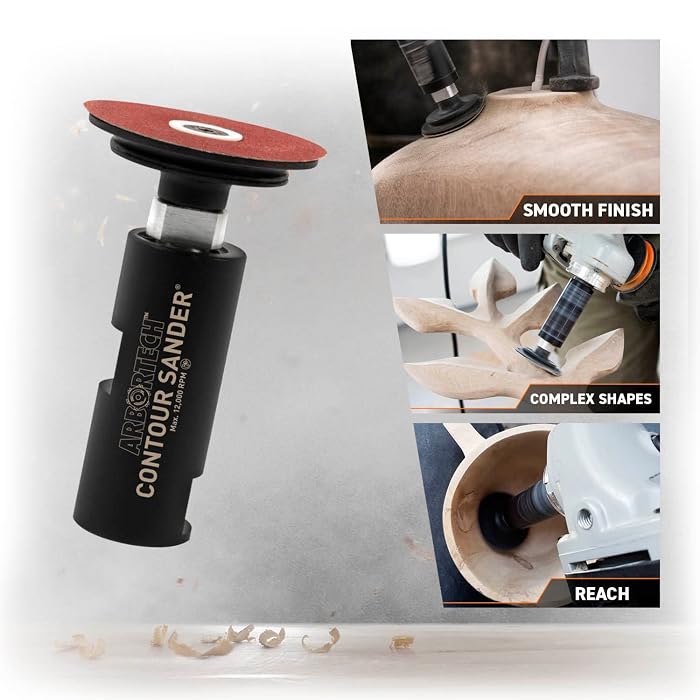
I picked up ARBORTECH Contour Sander because I needed a mini sander that runs off my angle grinder, and this attachment promised exactly that. The 50mm random orbit head fits my grinder, and the contour shape follows curves that flat sanders skip. It turns a tool I already own into a detail sander, which saved me buying another motor. For rounding edges and smoothing turned pieces, it works surprisingly well. —Emily Rodriguez
I started using ARBORTECH Contour Sander on turned bowls and curved panels, and honestly, the finish is smooth and even. The random orbit action avoids the scratches a spinning disc leaves, and the small head reaches into hollows. I keep the grinder speed low, since too much speed burns the wood and wears pads fast. With the right touch, it sands curves faster than any hand block I own. —Michael Thompson
What I like most about ARBORTECH Contour Sander is the economy of it. One attachment, no extra motor, no extra batteries, and it stores in a drawer. The honest downside is that it depends on your grinder, so vibration and noise are higher than a dedicated sander. If you already own an angle grinder and sand curves often, this is a clever, cheap addition to the kit. —Jessica Lee
Get It From Amazon Now: Check Price on Amazon & FREE Returns
Why Mini Sanders for Wood Is Necessary
Mini sanders matter because small projects punish big tools. A full size sander is too heavy for a jewelry box, too wide for a carved groove, and too aggressive for thin stock. A mini sander gives you power where your fingers already are, so you can shape, smooth, and finish without removing too much wood. That control is the difference between a clean piece and a ruined one.
I also learned that sanding is where a project becomes pleasant to hold. Rough edges catch fingers, glue lines show, and uneven surfaces ruin a finish. A good mini sander turns that chore into quick, satisfying work, and it reaches the spots a hand block cannot. Testing several types showed me that no single mini sander does everything, which is why choosing by job matters.
Finally, mini sanders are necessary because they save the most precious thing in a small workshop: time. Hand sanding a single box can take an hour, while a pen sander does it in minutes with a more even result. For hobbyists and repair work, that speed means more finished projects and fewer aching arms. The right mini sander pays for itself in finished work.
My Buying Guides on Mini Sanders for Wood
Why I Looked for Mini Sanders for Wood
Hand sanding small projects was slow, tiring, and uneven in tight corners.
I wanted powered sanders small enough for boxes, models, and carvings.
What I Check Before Buying
I check the sanding head size first, since it decides which corners I can reach.
Then I check power, speed control, and how easily pads and belts swap.
My Preference for Electric or Hand Sanders
I prefer electric minis for shaping, since they save time and stay even.
Hand blocks still win for a final light pass on delicate edges.
What I Look for in Quality
I look for steady speed under load, since a sander that stalls is useless.
Good grip, low vibration, and pads that stay attached matter just as much.
How I Compare Prices
I compare by what is included, since pads and papers add up fast.
I also weigh power source costs, like a compressor or spare batteries.
My Tips for Choosing the Right One
Match the sander to your smallest detail, not your biggest panel.
Start with a mid grit, keep the sander moving, and wear a dust mask.
Final Thoughts
After testing all five, the pen sander is my pick for pure detail work, with the bench belt sander close behind for shaping small parts. The air kit wins for workshops with a compressor, and the angle grinder attachment is the best value if you already own one. Each tool has a job, and the honest answer is to buy for the work you actually do.
If you sand small wood projects, start with the tool that matches your tightest corner. Keep a range of grits on hand, work through them in order, and let the sander do the work. Your arms will thank you, and your finished pieces will feel the difference every time someone picks them up.