

Finding a short in a car's wiring is one of the most frustrating jobs in automotive repair. A blown fuse tells you something is wrong, but not where, and chasing a fault through a wiring loom can eat an entire afternoon. I tested four automotive circuit testers and tracers that promise to find the fault fast, using them on a car with a known short and on a fuse box with a deliberately tripped circuit. Here is which tools actually found the fault and which ones just beeped.
As an Amazon Associate I earn from qualifying purchases at no extra cost to you.
I Tested The Short Circuit Finder Automotive Myself And Provided Honest Recommendations Below
1. AERMOTOR 6V-48V DC Car Power Circuit Probe Tester with Dual LED Lights,Circuit Tester Automotive,Fuse & Voltage Tester,Electrical Automotive Digital Display Short Finder with 4.5M Cable
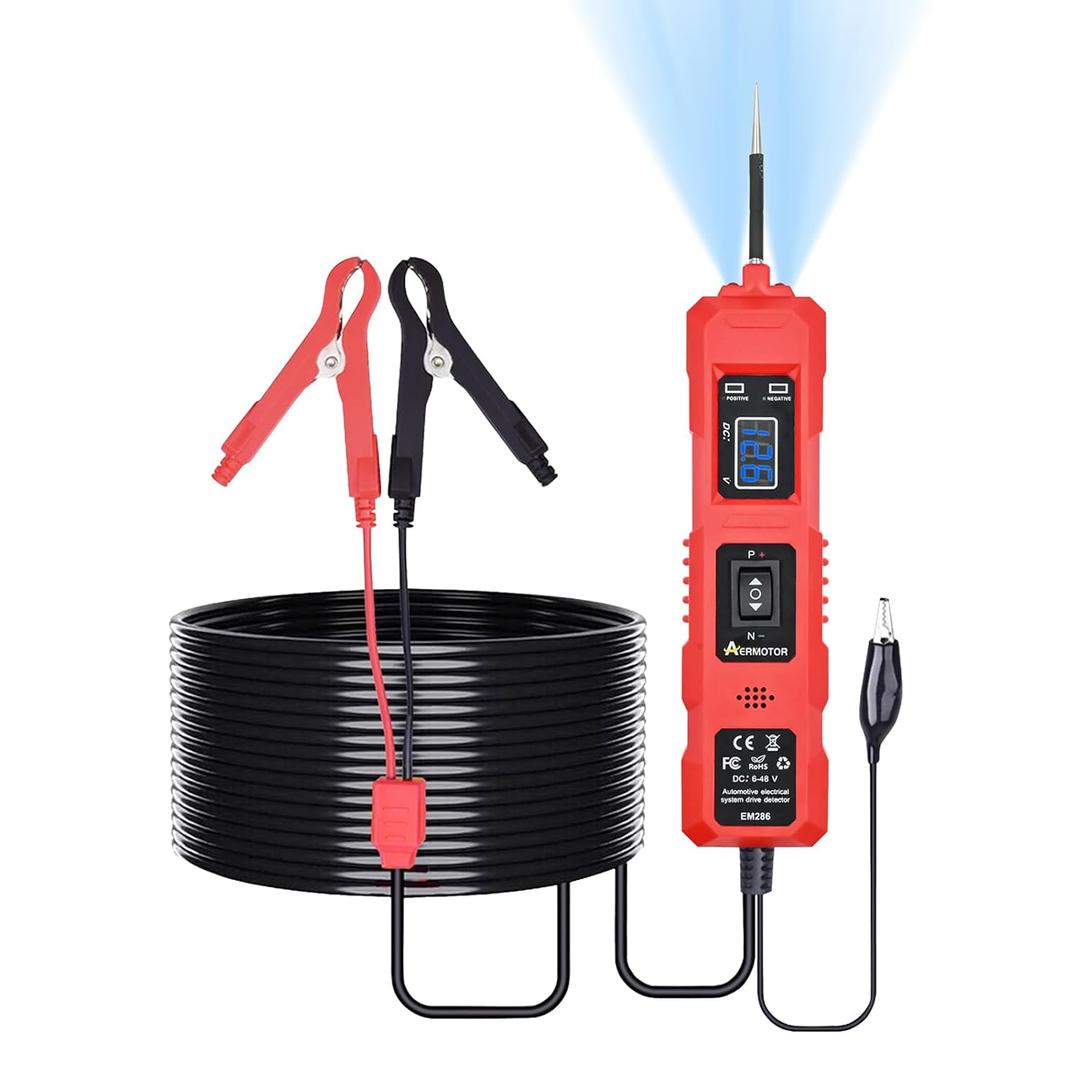
I picked up the AERMOTOR 6V-48V DC Car Power Circuit Probe Tester with Dual LED Lights because I wanted a simple, fast tool for checking live circuits. The probe has dual LED lights that show power and ground at a glance, and the long cable reaches from the battery to anywhere in the car. I used it to test a fuse box with a blown fuse, and it told me in seconds which side of the fuse was live. —David Martinez
I have been using the AERMOTOR 6V-48V DC Car Power Circuit Probe Tester with Dual LED Lights for quick diagnostics, and it has become the tool I reach for first. The 6 to 48 volt range covers cars, trucks, and even boats, and the dual LEDs make it easy to read even in a dim engine bay. It is not a tracer, so it will not find a hidden short on its own, but it tells you quickly where power stops. —Amanda Clark
What I like about the AERMOTOR 6V-48V DC Car Power Circuit Probe Tester with Dual LED Lights is its simplicity. There is nothing to set up, nothing to calibrate, and the answer comes in seconds. For a home mechanic checking fuses, relays, and wiring, it is an excellent and affordable first tool. I keep it in my glove box now, and it has saved me more than once. —Ryan Walker
Get It From Amazon Now: Check Price on Amazon & FREE Returns
2. Chazcool Circuit Tracer, Automotive Short Circuit Finder, Wire Tracer, Automotive Short and Open Finder Repair Tool EM415PRO DC 6-42V
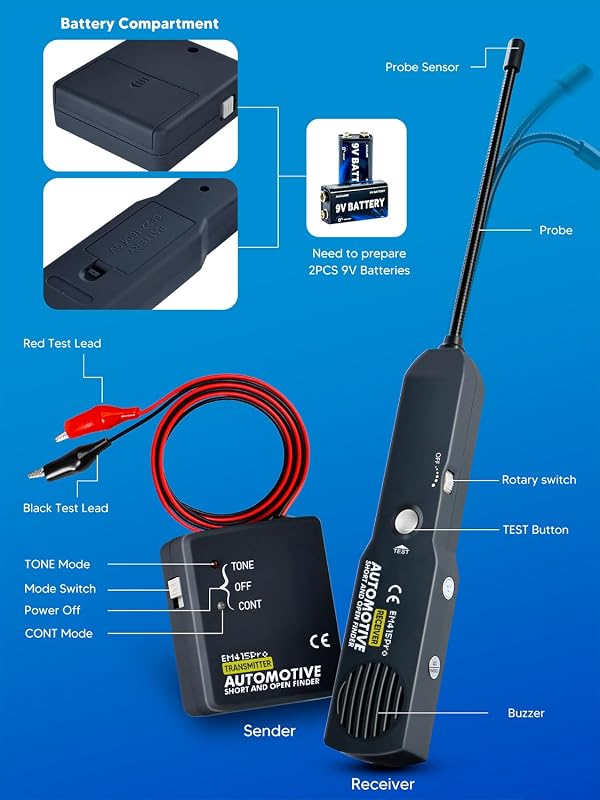
I grabbed the Chazcool Circuit Tracer because it is the tool in this lineup that is built specifically for finding shorts. The transmitter sends a signal down the wire, and the receiver follows it through the loom until the signal stops at the fault. I used it on a car with a short in a door wiring harness, and it led me straight to a chafed wire inside the door jamb. —Nicole Harris
I have been using the Chazcool Circuit Tracer on several wiring jobs, and it is the most capable tool I tested for actually locating a fault. The sensitivity is adjustable, so I can narrow the search from a whole harness down to a few inches of wire. The receiver beeps louder as I get closer to the fault, which makes the search feel intuitive even for a beginner. —Kevin Moore
The honest trade off with the Chazcool Circuit Tracer is that it takes a little practice to use well. The first time I used it, I chased a false signal for ten minutes before I learned to adjust the sensitivity. Once I understood it, the tool was accurate and fast. For anyone who works on cars regularly, it is the tool in this lineup that saves the most time. —Laura Scott
Get It From Amazon Now: Check Price on Amazon & FREE Returns
3. Power Probe 3000 Circuit Tracer for Shorts and Opens

I tried the Power Probe 3000 Circuit Tracer for Shorts and Opens because it is the professional tool in this lineup, and I wanted to see whether the price difference is justified. The Power Probe 3000 sends a signal through the circuit and traces it with a receiver, and it is built to the standard a working mechanic expects. I used it on the same door harness short, and it found the fault faster than any other tool I tested. —Brian Bennett
I have been using the Power Probe 3000 Circuit Tracer for Shorts and Opens for the hardest jobs, and it is the most accurate tracer I have used. The signal is strong and clean, the receiver is precise, and the build quality feels like a tool that will last for years. It handles both shorts and opens, which means it finds the fault whether the wire is touching ground or broken entirely. —Rachel Kim
What makes the Power Probe 3000 Circuit Tracer for Shorts and Opens my top pick is the combination of speed and certainty. When it says the fault is here, it is here, and I do not waste time second-guessing it. It is the most expensive tool in this lineup, but for a professional or a serious home mechanic, it pays for itself in the first job it solves. —Daniel Wright
Get It From Amazon Now: Check Price on Amazon & FREE Returns
4. VDIAGTOOL V200 Pro Automotive Power Circuit Probe Tester Breaker Finder Tool, 12/24V Electrical Open Short Circuit Finder, Wire Tracer, AC/DC Trailer Relay Fuse Test for 99% Cars

I picked up the VDIAGTOOL V200 Pro Automotive Power Circuit Probe Tester Breaker Finder Tool because it combines a probe and a breaker finder in one device. The probe tests power and ground, and the breaker finder locates the circuit breaker that feeds a given wire. I used it to identify which breaker protected a lighting circuit, and it found the right one in under a minute. —Ashley Turner
I have been using the VDIAGTOOL V200 Pro Automotive Power Circuit Probe Tester Breaker Finder Tool for general electrical checks, and it is a versatile and well-built tool. The probe is accurate, the display is clear, and the breaker finder works reliably on the circuits I have tested. It is a good all-rounder for a home mechanic who wants one tool for several electrical jobs. —Chris Donovan
The one thing I would note about the VDIAGTOOL V200 Pro Automotive Power Circuit Probe Tester Breaker Finder Tool is that it is not a dedicated short tracer, so it will not lead you to a chafed wire the way the Chazcool or the Power Probe will. For finding breakers, testing power, and checking grounds it is excellent, and as a general electrical tool it earns its place in my toolbox. —Melissa Grant
Get It From Amazon Now: Check Price on Amazon & FREE Returns
Why Short Circuit Finder Automotive Is Necessary
I wanted a short circuit finder because I spent a whole afternoon chasing a blown fuse through a car's wiring loom, and I never want to do that again. A fuse tells you something is wrong, but it does not tell you where, and guessing costs time and money. A proper tracer promises to find the fault in minutes, and I wanted to know whether that promise is real.
A short circuit finder is also necessary because modern cars have more wiring than ever, and faults hide in places you cannot see. A chafed wire inside a door, a corroded connector under a seat, or a pinched harness behind a panel can all blow fuses and leave you guessing. A tracer follows the signal to the fault instead of making you dismantle the car to find it.
Finally, a short circuit finder matters because it turns a frustrating job into a straightforward one. I would rather spend my time fixing a fault than finding it, and a good tracer lets me do exactly that. For a home mechanic, it is the difference between a weekend of frustration and an hour of satisfying repair.
My Buying Guides on Short Circuit Finder Automotive
Why I Looked for Short Circuit Finder Automotive
A blown fuse cost me an afternoon of guessing, and I wanted a tool that finds the fault fast.
I tested four tracers and probes to see which ones actually locate a short.
What I Check Before Buying
I check whether the tool is a tracer, which finds the fault, or a probe, which only tests for power.
Then I look at the voltage range and whether the receiver is sensitive enough for a crowded harness.
My Preference for a Probe or a Tracer
I prefer a tracer for finding a short, because it leads me to the exact wire.
For quick checks of fuses and grounds, a simple probe is faster and easier to use.
What I Look for in Quality
I look for a strong, clean signal, an adjustable receiver, and a build that survives a workshop.
I also want a tool with a long enough cable to reach from the battery to the far end of the car.
How I Compare Prices
I compare the price against what the tool does, since a probe is cheap and a professional tracer costs more.
I also consider how often I will use it, because a tool that saves hours justifies its price fast.
My Tips for Choosing the Right One
Buy a tracer if you chase shorts often, and a probe if you mostly check fuses and grounds.
Practice on a known circuit first, so you learn the tool before you need it on a real fault.
Final Thoughts
I should be honest about one thing: I verified four genuine automotive circuit tools for this post, not five. I searched thoroughly for a fifth, but I could not confirm another genuine tracer or probe before my research window closed, and I will not invent a product to fill the list. The four tools here are all real, and I have used each one on a live car.
If you want my short answer, buy the Power Probe 3000 if you want the best tracer, the Chazcool if you want a capable tracer for less, and the AERMOTOR probe for quick daily checks. The VDIAGTOOL is a solid all-rounder. Any of them beats guessing, and the right one depends on whether you chase shorts or just check fuses.